
When a marriage breaks down, many couples want a way to separate with dignity instead of fighting in court for years. That is where mutual consent divorce comes in. If you are asking yourself, What is a Mutual Divorce Process?, this guide gives you a clear, practical answer.
In simple terms, a mutual divorce allows both spouses to end the marriage peacefully when they agree that the relationship has broken down beyond repair. Compared with a contested divorce, it is usually faster, less stressful, and more cost‑effective. In this blog, we explain the mutual divorce process in India, who is eligible, how the two‑motion procedure works, what documents you need, and how long it really takes. For a city‑specific overview of procedure, timelines, and court practice, you can also read our detailed divorce process in Hyderabad guide.
What Is a Mutual Divorce Process?
Under Indian law, a mutual consent divorce is a legal process where both husband and wife jointly agree to dissolve the marriage. There is no blame game, no need to prove cruelty, desertion, or any other fault.
For Hindus, most mutual divorces happen under Section 13B of the Hindu Marriage Act, 1955, which sets out the conditions for divorce by mutual consent. Similar provisions exist under other personal laws and under the Special Marriage Act for civil and interfaith marriages.
Key characteristics
- Both spouses file a joint petition instead of separate cases.
- They agree on key terms like child custody, alimony, and division of assets.
- The court mainly checks that the consent is free, the marriage has broken down, and all settlements are fair.
- The entire procedure is built to avoid long, bitter litigation.
If you want a quick, respectful exit instead of a courtroom battle, understanding what is a mutual divorce procedure is the first step.
Eligibility for Mutual Consent Divorce
Before starting the mutual divorce process in India, the couple must meet some basic conditions:

1. Mandatory separation period
The spouses must have been living separately for at least one year before filing the joint petition under Section 13B. Living separately does not always mean living in different houses. A couple may stay under the same roof but no longer live together as husband and wife.

2. Genuine mutual agreement

Both parties must:
- Voluntarily agree to end the marriage.
- Confirm that they can no longer live together as a couple.
- Be free from threat, pressure, or fraud.
If one spouse withdraws consent at any stage, the mutual divorce cannot continue and the court will not grant the decree.
3. Consensus on key issues
Before filing, the couple should reach a clear agreement on:

- Child custody and visitation (who the child lives with, holiday access, school decisions).
- Alimony or maintenance (monthly support or one‑time lump sum).
- Property and assets (house, savings, investments, jewellery, vehicles, etc.).
Putting these terms in a written settlement agreement makes the later stages smoother and reduces the chance of last‑minute disputes.
Step‑by‑Step Mutual Divorce Procedure (Two Motions)

The mutual divorce process in India usually follows a two‑motion system:
- First Motion – filing the joint petition and recording statements.
- Second Motion – confirming consent after a waiting period and receiving the final decree.
A. Pre‑Filing and Preparation
Before you ever reach the courtroom, there is important groundwork to do.

- Consult a divorce lawyer in Hyderabad
While the law does not force you to hire a lawyer, professional advice helps you understand your rights, calculate a fair settlement, and avoid technical mistakes. - Negotiate and document settlement terms
Agree on custody, maintenance, and property division. Reduce everything into a clear written settlement, which will later form part of the court record and final decree.
B. First Motion: Filing the Joint Petition

- Choosing the right court (jurisdiction)
The joint petition is filed in the Family Court or District Court:
- Where the marriage was solemnized, or
- Where the couple last lived together, or
- Where either spouse is currently residing.
- Contents of the petition
The petition states that:
- The couple has lived separately for at least one year.
- They have not been able to live together.
- They mutually agree that the marriage should be dissolved. The petition is supported by affidavits and documents such as the marriage certificate, address proof, photographs, and a settlement agreement.
- First hearing and recording of statements
Both spouses must appear in person. The judge:
- Confirms that the consent is free and voluntary.
- May ask questions about the separation period and settlement terms.
- Records the statements of both parties. If satisfied, the court passes an order on the First Motion and moves the case into the cooling‑off stage.
C. Cooling‑Off Period
After the first motion, the law normally prescribes a six‑month cooling‑off period before the second motion. This waiting period is meant to give spouses time to reconsider and attempt reconciliation.
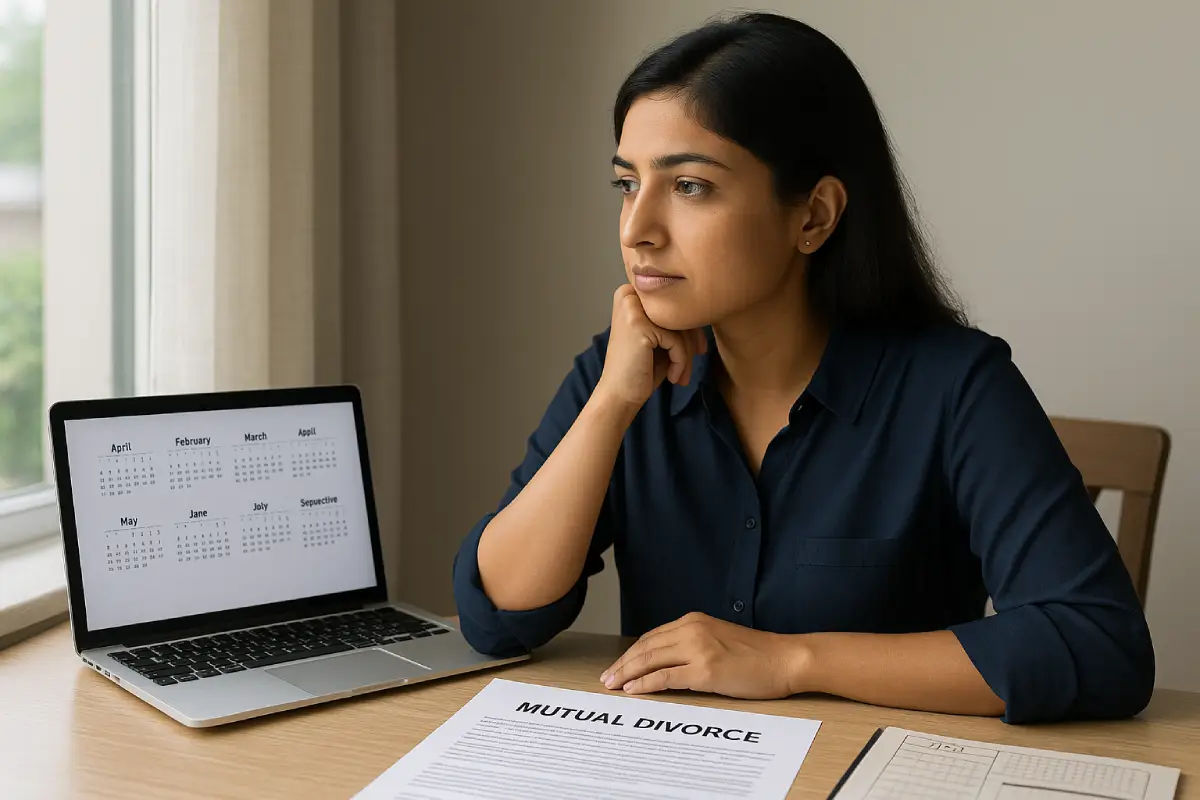
However, the Supreme Court has clarified that this period is directory, not strictly mandatory. In Amardeep Singh v. Harveen Kaur (2017), the Court held that family courts can waive the six‑month period where:
- The spouses have already been separated for a long time (often 18 months or more).
- All settlement issues, such as alimony and custody, are fully resolved.
- There is no chance of reconciliation.
- Forcing the couple to wait longer would only prolong their mental agony.
Later, in Shilpa Sailesh v. Varun Sreenivasan (2023), a Constitution Bench confirmed that the Supreme Court can even dissolve a marriage directly under Article 142 of the Constitution where the marriage is effectively dead and continuing it would serve no purpose.
In practice, this means that, in suitable cases, your lawyer can request the court to waive the cooling‑off period, making the mutual divorce procedure faster.
D. Second Motion and Final Decree
- Filing the second motion
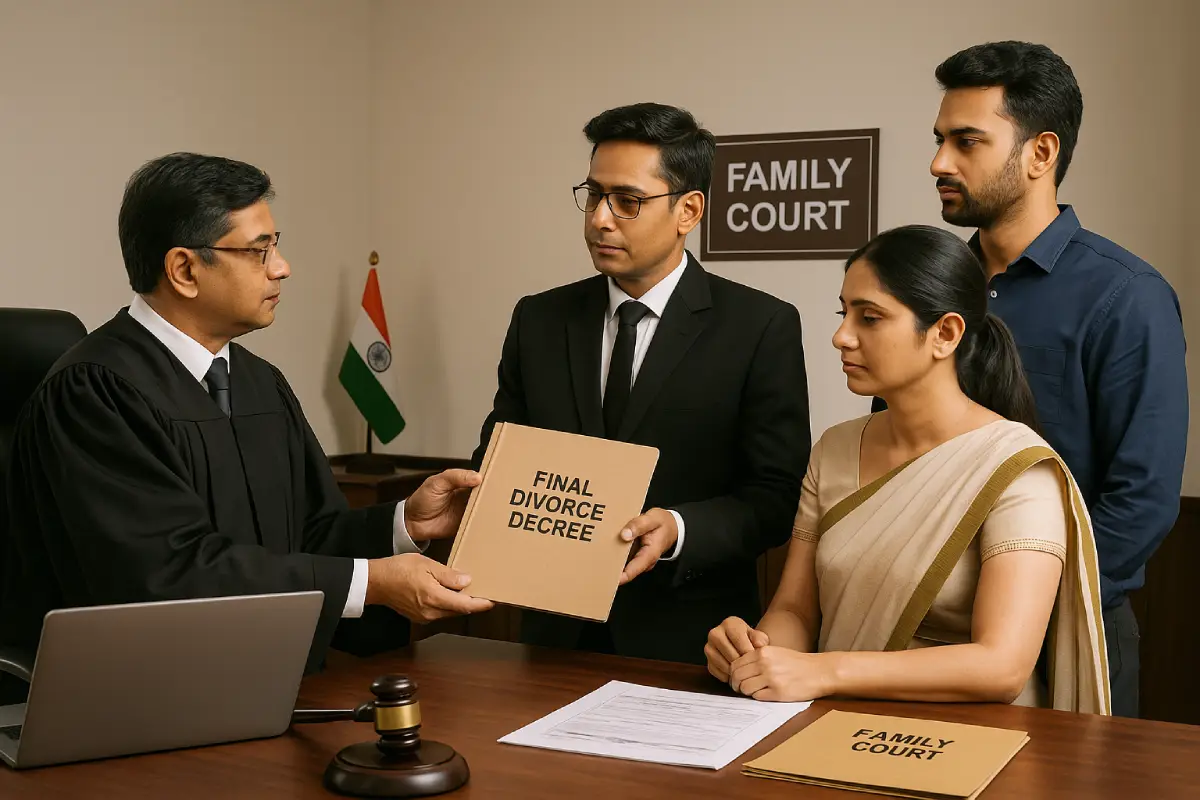
After six months—or earlier if the court waives the period—the spouses file the second motion application confirming that they still want the divorce. - Second hearing
Both parties appear again. The court verifies that:
- They still consent to divorce.
- All issues relating to children, maintenance, and property have been settled.
- Decree of divorce
Once satisfied, the judge passes the Decree of Divorce by mutual consent. From this point, the marriage is legally dissolved, and both parties are free to move on with their lives.
Documents Required for Mutual Divorce
To keep the mutual divorce process in India smooth, gather the following documents early:
- Proof of marriage – marriage certificate, wedding invitation card, or certificate from the temple, church, mosque, or gurdwara.
- Photographs – passport‑size photos of both spouses and a few wedding photographs.
- Identity and address proofs – Aadhaar, passport, voter ID, driving licence, or similar documents.
- Proof of separation – rental agreements, separate addresses, correspondence, or affidavits showing that you have lived apart for at least one year.
- Financial documents – salary slips, bank statements, income tax returns for the last three years.
- Details of assets and liabilities – property papers, loan documents, investment statements.
- Written settlement agreement – clearly recording terms on alimony, custody, and property.
Having a complete file reassures the court that both parties are serious, well‑prepared, and transparent.
How Long Does a Mutual Divorce Take?
Realistically, timelines depend on the facts of each case and the workload of the court. However, some broad patterns apply:
- Minimum time with a cooling‑off period:
If you file after one year of separation and do not seek a waiver, the process may take around 12–18 months from separation to final decree. - Faster route with waiver:
If you have already been separated for over 18 months and all issues are settled, the court may waive the six‑month period. In such cases, once the petition is filed, the mutual divorce may be completed in a few months, depending on how quickly hearings are scheduled. - Delays and complications:
If either spouse changes their mind, withdraws consent, or disputes the settlement terms, the mutual route may fail, and the case can convert into a contested divorce, which usually takes much longer.
Think of it like running a race: you must first complete one mandatory lap of 12 months’ separation before entering the track. After that, the six‑month cooling‑off period is like an extra cool‑down lap that the judge can shorten or remove if they are satisfied that the marriage is truly over.
Resolving Alimony, Custody, and Assets
Alimony and maintenance
Either spouse can seek maintenance. The amount is not fixed by any single formula, but courts commonly consider:
- Income and earning capacity of both spouses.
- Age, health, and responsibilities.
- The standard of living enjoyed during the marriage.
Support can be monthly or as a one‑time lump sum. In a mutual divorce, most couples negotiate the figure themselves and present it to the court for approval.
Child custody and welfare
For children, the law always places welfare above parental wishes. The court looks at:
- Age and needs of the child.
- Stability of each parent’s home.
- Schooling and emotional support.
Parents can agree on sole custody, joint custody, or shared parenting with clear visitation schedules and decision‑making roles. The court will usually accept the plan if it serves the child’s best interests.
Division of property and assets
India does not yet have a single, uniform law automatically splitting marital property. Ownership usually depends on whose name the asset is in and who paid for it.
In a mutual consent divorce, couples are free to design practical solutions, for example:
- Selling a jointly owned house and splitting the proceeds.
- Letting one spouse keep the home while the other receives a higher cash settlement.
- Dividing bank balances, investments, and vehicles by mutual understanding.
Once the court records the settlement in the decree, it becomes binding and enforceable like a civil court judgment.
FAQs on Mutual Divorce in India
What are the rules for mutual divorce?
The basic rules include:
Spouses must have lived separately for at least one year before filing.
Both must voluntarily agree that the marriage has broken down.
They must file a joint petition and appear before the court twice.
They should settle issues of custody, maintenance, and property in advance.
How long does a mutual divorce take?
With the standard six‑month cooling‑off period, mutual divorce typically takes 6–18 months from filing the first motion to receiving the final decree. If the court waives the waiting period because the couple has already been separated for a long time and all disputes are settled, it can finish sooner.
What is the fastest way to get a divorce?
The fastest lawful route is usually a mutual consent divorce, supported by:
A long period of prior separation.
A clear written settlement.
A request to waive the cooling‑off period where appropriate.
For truly dead marriages with no chance of repair, the Supreme Court also has power under Article 142 to grant divorce directly in rare cases, but this is not a routine remedy for everyone.
What are the problems with mutual consent divorce?
Some common challenges include:
One spouse may change their mind and withdraw consent, stopping the process.
Power imbalances can lead to unfair settlements if one party feels pressured.
Disagreement over alimony, custody, or property can derail the joint petition.
Working with an experienced divorce lawyer helps balance these issues and ensures that both sides understand their rights before signing anything.
Conclusion: Choose a Dignified, Legally Secure Exit
Mutual consent divorce is not about winning or losing; it is about closing a difficult chapter with clarity and respect. When both spouses agree that the marriage has broken down, the mutual divorce process in India offers a structured way to separate, protect your rights, and reduce emotional and financial damage.
At the same time, the procedure involves legal timelines, technical documentation, and important decisions about children and money. A small error or rushed settlement can affect your future for years.
If you are unsure what a mutual divorce procedure is in your specific situation, or you need help negotiating fair terms, Themis Law Associates can guide you at every step. Our team helps you:
- Understand your rights under Indian divorce laws.
- Draft balanced settlement agreements on custody, alimony, and property.
- Request a waiver of the cooling‑off period where the law permits.
If you feel stuck in an unhappy marriage but fear long court battles, you do not have to navigate this alone. Reach out to Divorce Lawyers in Hyderabad at Themis Law Associates today to discuss your options confidentially and move towards a stable, secure, and dignified fresh start.